Reviving Retro Style: How Madista Vintage Transforms Your Design Projects
In the ever-evolving landscape of graphic design, trends often circle back to the aesthetics of previous decades. Currently, there is a surging demand for visuals that evoke the warmth, boldness, and character of the 1970s and 1980s. However, finding typography that authentically captures this era without feeling clichéd or difficult to implement can be a significant hurdle for designers, marketers, and small business owners. This is where Madista Vintage steps in as a powerful solution. More than just a typeface, it is a versatile tool designed to bridge the gap between nostalgic inspiration and modern application, offering a fun, bold style that instantly elevates branding, packaging, and promotional materials.
The Challenge of Authentic Retro Branding
Many creatives face a common dilemma: they want to create a vintage look, but standard fonts often fall flat. Generic serif or sans-serif fonts lack the specific quirks, ligatures, and weight variations that define true retro lettering. When designers attempt to force a modern font into a vintage context, the result can feel disjointed or artificial. Furthermore, the technical aspect of accessing alternate characters—those fun swashes and unique glyphs that give a logo its personality—is often cumbersome in standard font files. Users frequently find themselves jumping through hoops in their design software just to access a single decorative element, slowing down the creative workflow.
The goal for most users is not just to have a "retro" font, but to have a resource that simplifies the creation of authentic, eye-catching designs. Whether you are designing a logo for a new coffee shop, creating merchandise for a music festival, or laying out a book cover that needs to stand out on a shelf, the typography must do heavy lifting. It needs to convey mood, era, and brand identity simultaneously. Madista Vintage addresses these needs by providing a pre-styled aesthetic that requires minimal manipulation to look professional and period-accurate.
Understanding the Madista Vintage Aesthetic
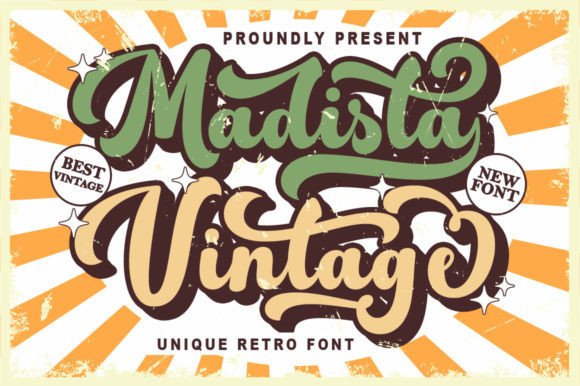
Madista Vintage is a fun font inspired directly by the typographic trends of the 70s and 80s, mixed with a contemporary bold typography style. It captures the essence of an era known for experimentation, vibrant colors, and confident lines. The letterforms are constructed to feel substantial and impactful, making them ideal for headlines and display text where readability and style must coexist. Unlike delicate script fonts that might get lost in complex layouts, this typeface commands attention while maintaining a playful, approachable vibe.
What sets this font apart is its attention to the details that define the genre. The curves are generous, the terminals are distinct, and the overall spacing suggests a hand-crafted quality that resonates with audiences seeking authenticity. By integrating these historical elements into a digital format, Madista Vintage allows users to bypass the time-consuming process of manually distressing or modifying standard fonts to achieve a worn, classic look.
Practical Applications and Real-World Outcomes
The versatility of Madista Vintage makes it suitable for a wide array of projects. Its robust nature ensures it performs well across different mediums, from digital screens to physical print. Here is how different users can leverage this tool to achieve specific outcomes:
- Logo Design and Branding: For startups looking to establish a unique identity, this font provides an instant personality. A bakery, a barbershop, or a craft brewery can use the bold strokes to create a logo that feels established and trustworthy yet fresh.
- Apparel and Merchandise: T-shirt designers often struggle with typography that looks good on fabric. The thick lines of Madista Vintage translate perfectly to screen printing and embroidery, ensuring that designs remain legible and stylish on clothing.
- Packaging and Labeling: In the retail sector, shelf appeal is critical. Using this font on product labels, jar lids, or box fronts can evoke a sense of artisanal quality and heritage, influencing purchasing decisions.
- Posters and Signage: Event promoters and interior designers can utilize the font for large-format prints. Its high contrast and clear forms ensure that messages are read quickly from a distance, making it perfect for concert posters, sale signs, or wayfinding.
- Publishing: Book covers, particularly for genres like mystery, historical fiction, or lifestyle guides, benefit from the nostalgic pull of 70s and 80s lettering. It helps set the tone before the reader even opens the book.
Maximizing Potential with PUA Encoding
One of the most significant technical advantages of Madista Vintage is that it is PUA encoded. For those unfamiliar with the term, PUA stands for Private Use Area. In practical terms, this means that all the special characters, alternative glyphs, and decorative swashes are mapped to standard keys on your keyboard. You do not need specialized software or complex glyph panels to access the full range of the font's capabilities.
This feature dramatically streamlines the design process. Imagine needing to add a flourish to the end of a word or swap a standard "S" for a more stylized version to improve the balance of a logo. With PUA encoding, you simply type a specific character or use a keyboard shortcut to instantly swap in these elements. This accessibility encourages experimentation. Designers can rapidly iterate through different combinations of letters and swashes to find the perfect composition without breaking their flow. It democratizes advanced typographic control, making it accessible to hobbyists and professionals alike.
Tailoring the Approach for Different Users
Different users will approach Madista Vintage with varying objectives, and the font adapts well to these diverse needs. A professional graphic designer might focus on kerning adjustments and combining specific swashes to create a custom logotype that is unique to a client. They will appreciate the depth of the character set and the ability to fine-tune the retro feel.
Conversely, a small business owner using DIY design tools may value the font for its "plug-and-play" nature. They can type their business name, apply the font, and immediately see a polished, professional result that rivals agency-quality work. The built-in stylistic alternatives mean they don't need to know the rules of typography to make their design look intentional and high-quality. Similarly, content creators and social media managers can use the font to create engaging graphics that stop the scroll, leveraging the bold aesthetic to highlight key messages or promotions.
Recommendations for Implementation
To get the most out of Madista Vintage, consider pairing it with simpler sans-serif fonts for body text. Since the display font is so rich in character and detail, keeping supporting text clean ensures that the hierarchy remains clear and the message is easily digestible. When working on color palettes, draw inspiration from the era the font represents; mustard yellows, burnt oranges, teals, and creams often complement the 70s and 80s vibe perfectly.
Additionally, do not be afraid to experiment with the PUA encoded characters. Try replacing standard letters with their alternate versions to create a more organic, less rigid look. This is particularly effective in badge designs or circular logos where the text needs to curve or fit tightly within a shape. The flexibility of the glyphs allows the text to conform to various shapes without losing its legibility or charm.
Ultimately, Madista Vintage offers more than just a stylistic choice; it offers a solution to the challenge of creating authentic, engaging retro designs efficiently. By combining historical inspiration with modern technical convenience, it empowers users to bring their creative visions to life with confidence and ease. Whether you are refreshing an old brand or launching something entirely new, this font provides the foundational style needed to make a lasting impression.